

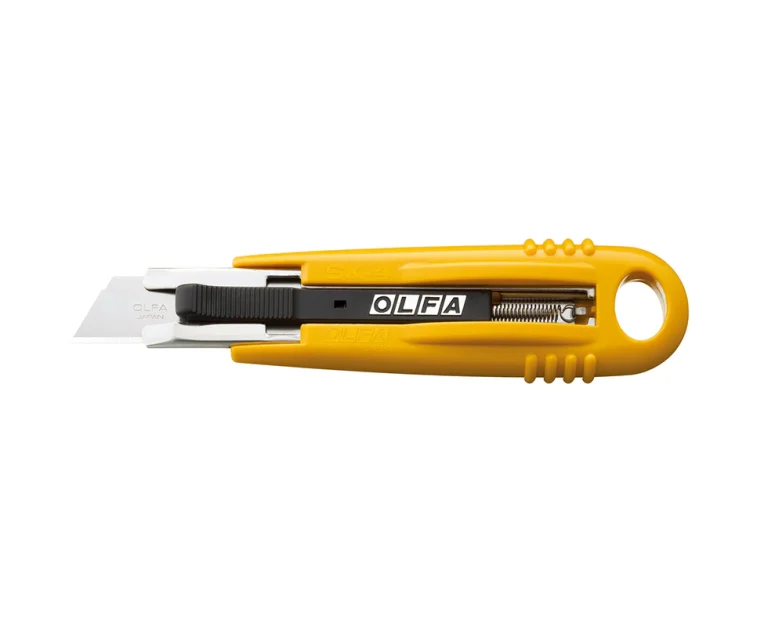
SK-4
OLFA SK-4
OLFA SK-4 exposes its replaceable blade during cutting and retracts it by spring when lifted from the surface. The body has a stainless-steel blade channel and can be configured for right- or left-handed use.
Cutting-tool control starts with the task, material, handling method and cutter mechanism, not only with replacing a conventional model.
Quick answer
A suitable model still has to match the workstation and material and be supported by clear issue, use, blade-change and collection procedures.
Describe each cutting point by material, cutting direction, frequency and tool-control method.
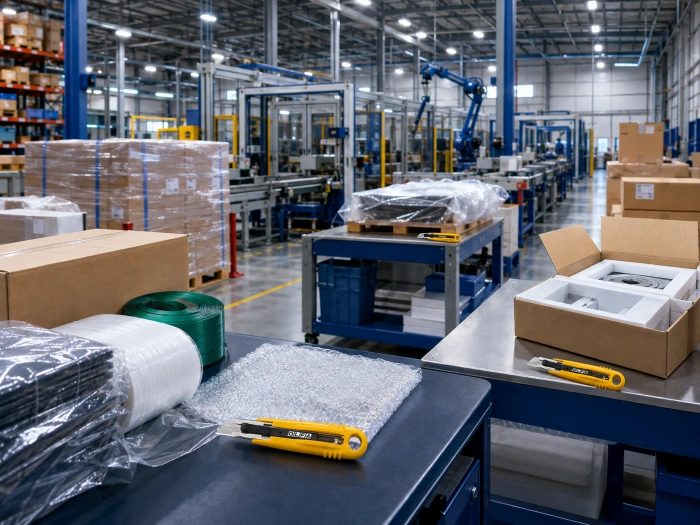
Opening cartons and handling packaging at warehouse, packing or QC stations.
Cutting stretch or shrink film, cushioning and plastic straps.
Match the cutting path to fibrous material and bag-opening work.
Check thickness and cutting-slot clearance for rubber, carpet or sheet material.
Separate frequent-cleaning or scraping work from packaging cutting.
Review improvised tools, storage, issue, blade replacement and collection.
Use this as an initial map, then verify the actual material and handling method at the workstation.
| Work point | Operation | Mechanism | Models to evaluate |
|---|---|---|---|
| Carton and tape | Repeated cuts through packaging | Self-retracting blade | SK-4, SK-7, SK-9 |
| Straps, rope and fibrous material | Guide material into a hook path | Hook blade on a self-retracting body | SK-4/HOK |
| Shrink film, cushioning and plastic straps | Guide material through a slot | Concealed blade | SK-10, SK-15/10 |
| Double-wall carton, rubber, carpet or thick sheet | Wider cutting slot | Concealed replaceable blade | SK-16 |
| Carton requiring stronger mechanism control | Evaluate material contact | Blade guard or fully automatic retraction | SK-6, SK-8 |
| Cleaning and residue removal | Separate cutting from scraping | Self-retracting mechanism and suitable body material | SK-5, SK-12 |
Share the application context so AE-TECH can support the next evaluation step.
Retraction depends on releasing the slider and removing blade load; user behavior remains part of control.
A guard surrounds the blade after the cut and must be assessed against material and cutting direction.
The blade retracts when material contact is lost, independent of slider release.
The blade sits inside a guided slot; material thickness and geometry must fit the path.
The groups below organize the approved strategic models by task and mechanism.
Start with carton thickness, tape, cutting direction and slider handling.
SK-4
OLFA SK-4 exposes its replaceable blade during cutting and retracts it by spring when lifted from the surface. The body has a stainless-steel blade channel and can be configured for right- or left-handed use.
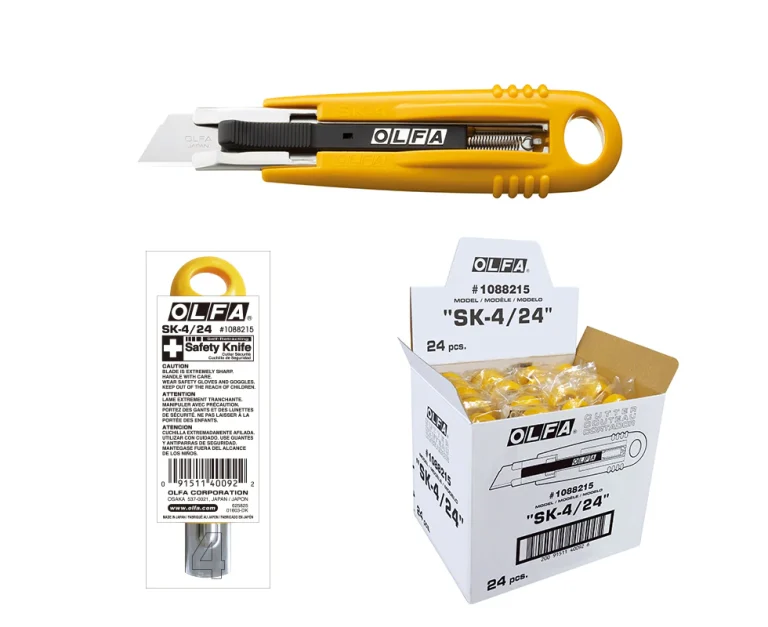
SK-4/24
OLFA SK-4/24 retains the spring-loaded retracting mechanism, replaceable blade and ambidextrous configuration of SK-4. The /24 suffix identifies the plastic-bag package and not a different cutting mechanism.
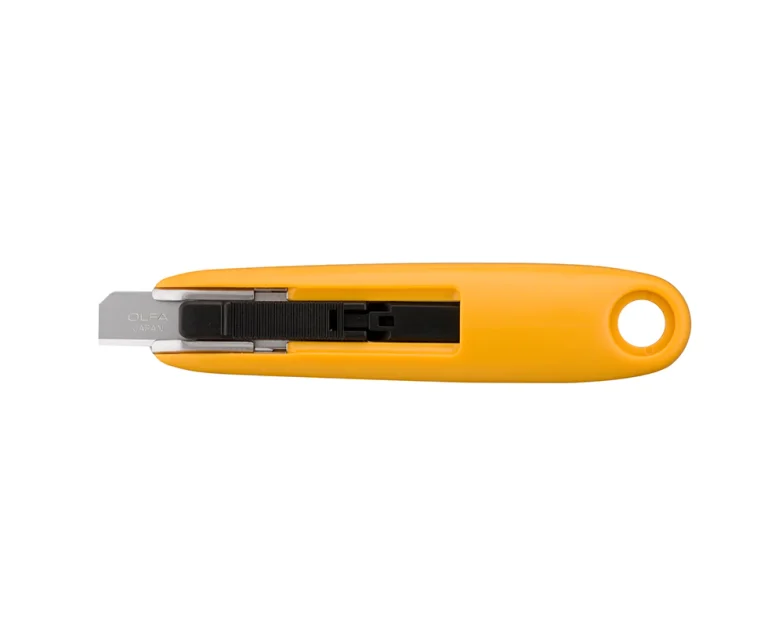
SK-7
OLFA SK-7 is a compact, lightweight safety cutter with a double-edged SKB-7 blade and a retracting mechanism. The official source does not specify a material, so it must be evaluated for the actual workstation task.
SK-9
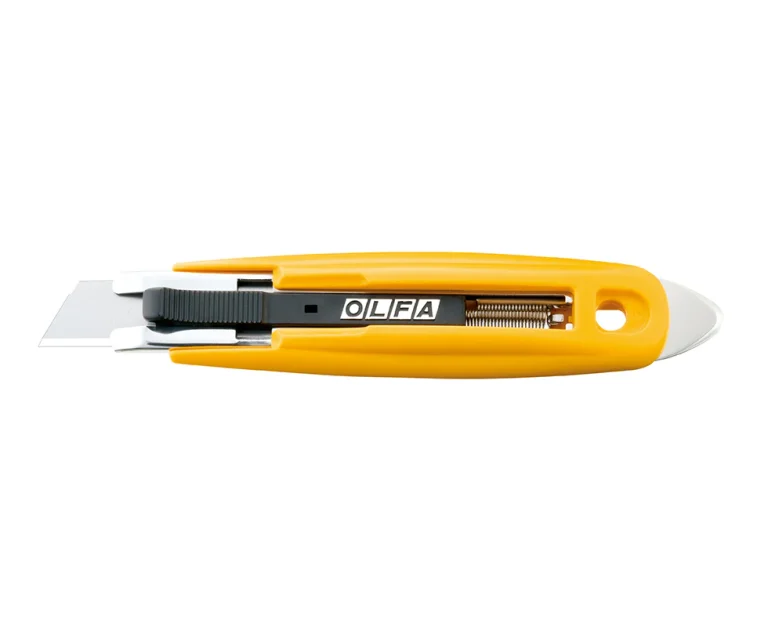
OLFA SK-9 retracts when it leaves the cutting surface and has a non-slip elastomer handle with an integrated metal tip for engaging a cardboard edge. The official source identifies package-splitting use but does not provide a complete cutting-material list.
Compare a hook path or concealed slot with the material section.
SK-4/HOK
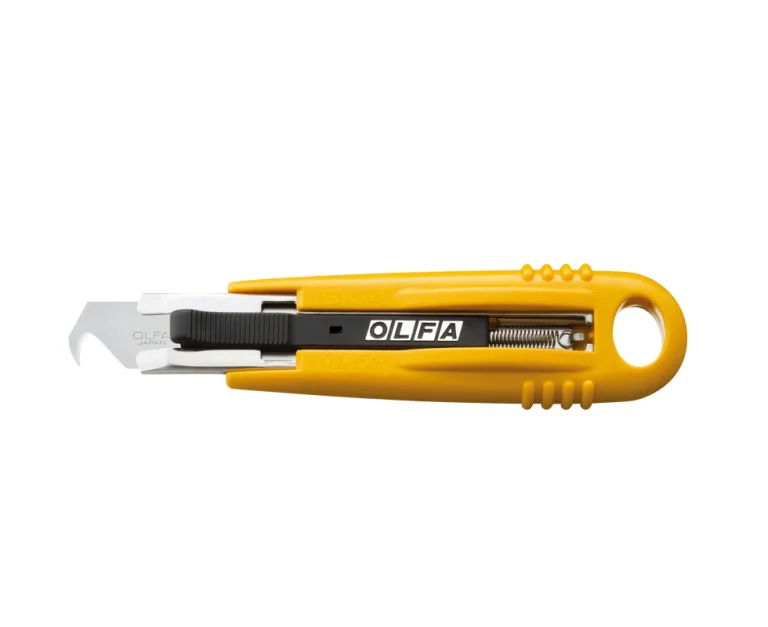
OLFA SK-4/HOK uses an SK-4 body fitted with an HOB-2 hook blade for plastic strapping, ties, rope and stretch film. The slider extends the blade, which retracts when it leaves the cutting surface. The blade can be configured for right- or left-handed use and replaced without tools.
SK-10
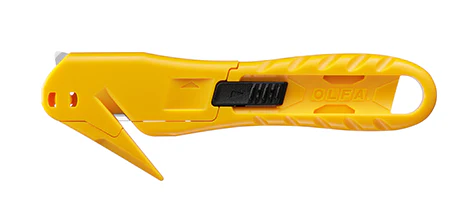
OLFA SK-10 is a packaging cutter with a replaceable SKB-10 blade positioned behind a beak-shaped guide slot. The slot directs film, strapping or cushioning material to the cutting edge, while a separate metal tip supports tape splitting.
SK-10/24
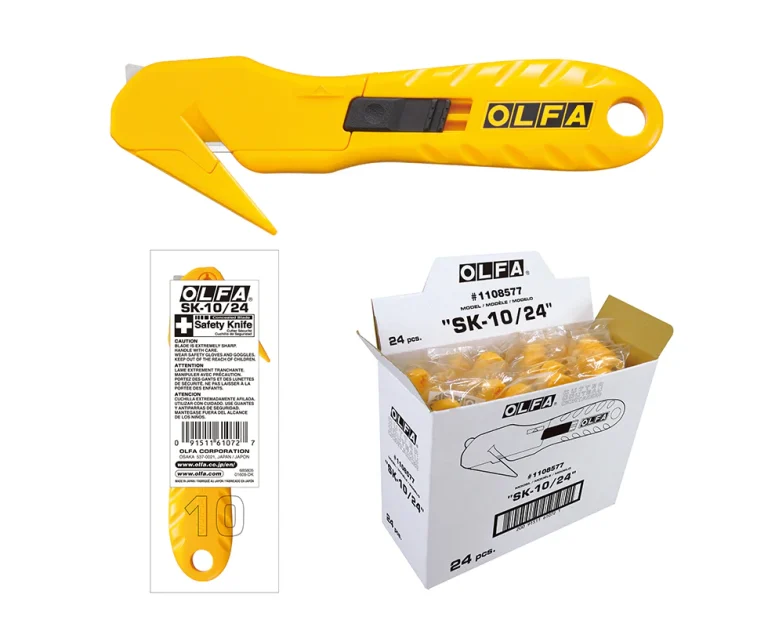
OLFA SK-10/24 retains the beak-shaped guide slot, replaceable SKB-10 blade and material scope of SK-10. The /24 suffix identifies the plastic-bag package and does not change the cutting mechanism.
Test slot clearance and material thickness at the workstation.
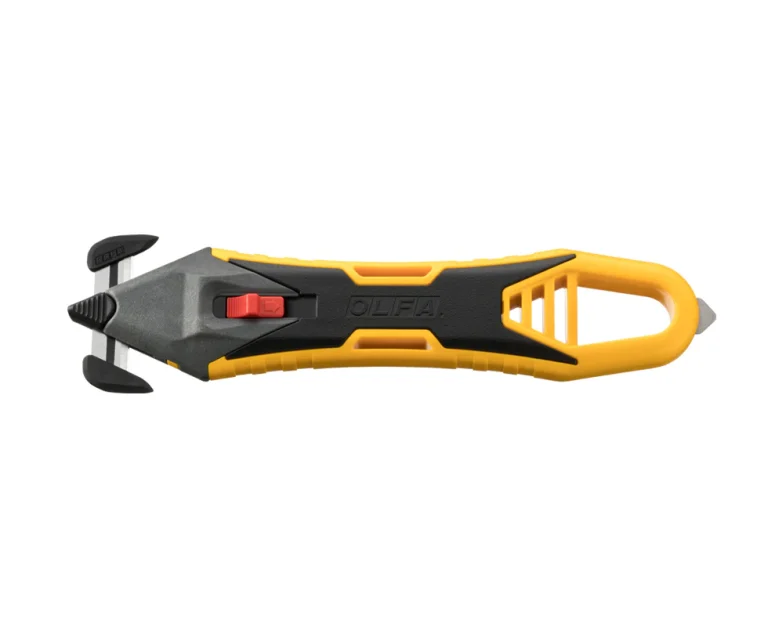
SK-16
OLFA SK-16 holds an SKB-16 blade between two guide plates and exposes only the cutting edge required. Its slot is wider than SK-15 and is suitable for double-wall cardboard, carpet, rubber sheet, stretch film and plastic strapping; a separate metal tip supports tape splitting.
Compare an automatic guard with full blade retraction after contact is lost.
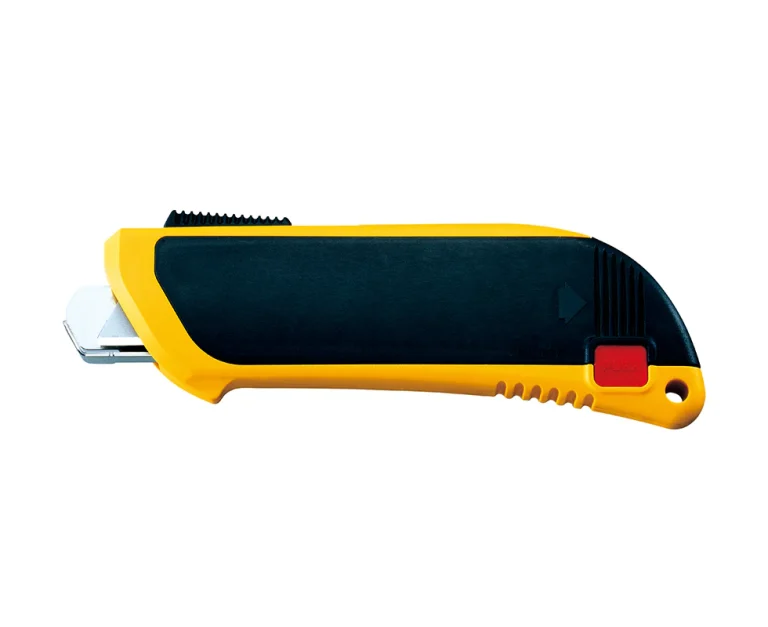
SK-6
OLFA SK-6 uses a round-tip RSKB-2 blade and an automatic guard. The guard opens when cutting begins and closes around the blade when the cutter leaves the surface, even while the slider remains held. This covers the blade instead of retracting it into the body.
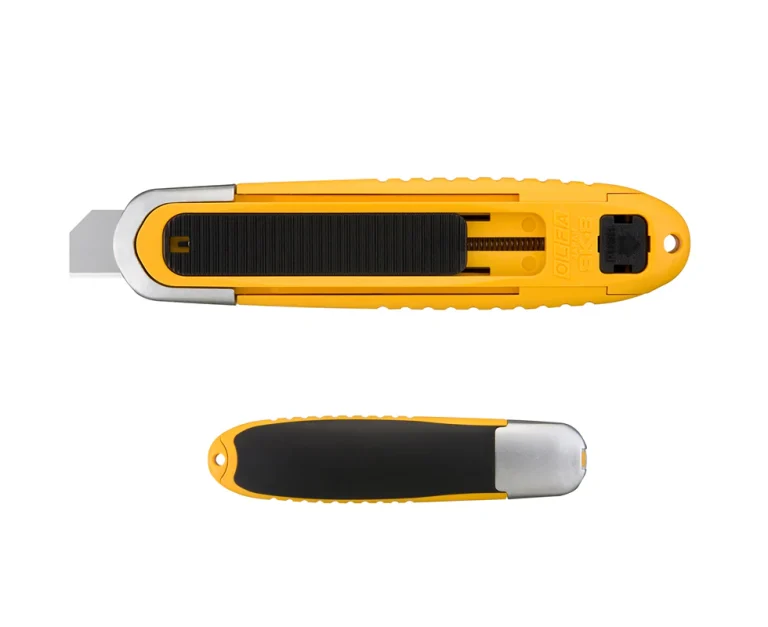
SK-8
OLFA SK-8 uses an SKB-8 blade for corrugated cardboard. The blade retracts after the cut or when material contact is lost, even while the slider remains held; this distinguishes it from the standard retracting mechanism of SK-4 and SK-5.
Separate residue scraping from frequent-cleaning requirements.
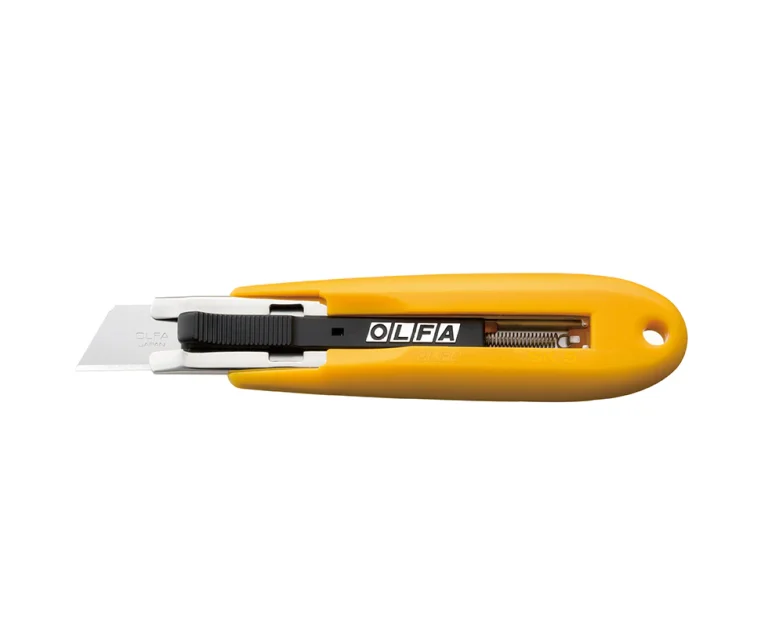
SK-5
OLFA SK-5 uses a spring-loaded mechanism that retracts the blade when the cutter leaves the cutting surface. Its principal difference from SK-4 is the non-slip elastomer ComfortGrip body with a stainless-steel blade channel.
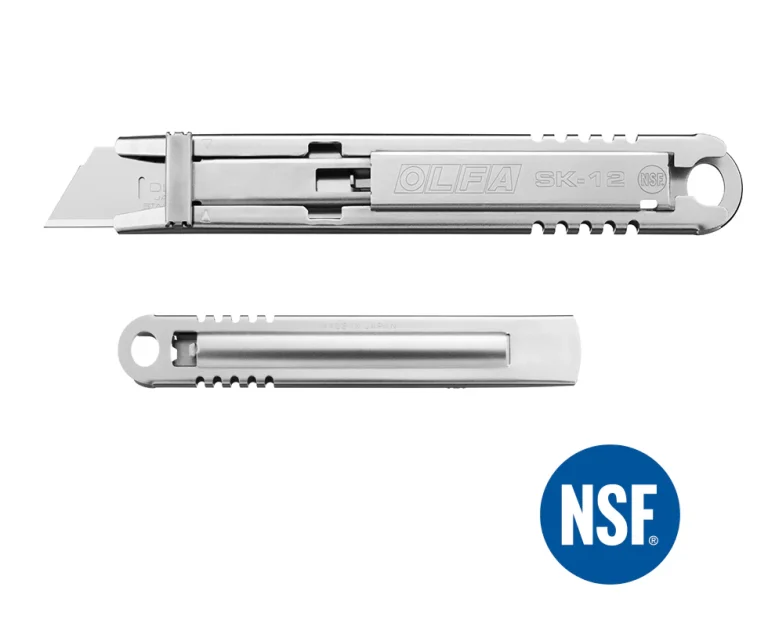
SK-12
OLFA SK-12 has an all-stainless-steel construction, a replaceable blade and a retracting mechanism. The official source notes cleaning in wet and hygiene-controlled environments and states that the product is not designed for direct food cutting.
Include issue, replacement, collection and management responsibility.
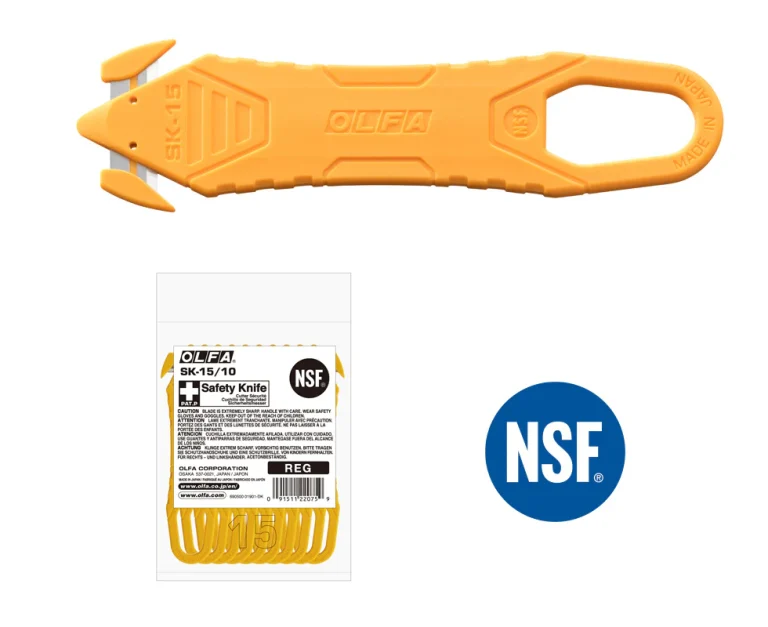
SK-15/10
OLFA SK-15/10 is the base SK-15 code, packed in a bag of 10 without a color suffix. It uses a fixed stainless-steel blade within a guide slot; the blade is not replaceable, and a separate tip supports tape splitting. This package differs from SK-15/10/WHT, SK-15/10/BLU and the SK-15/DSB display box.
Share the application context so AE-TECH can support the next evaluation step.
Blade links below are derived from the existing canonical compatibility relationships.
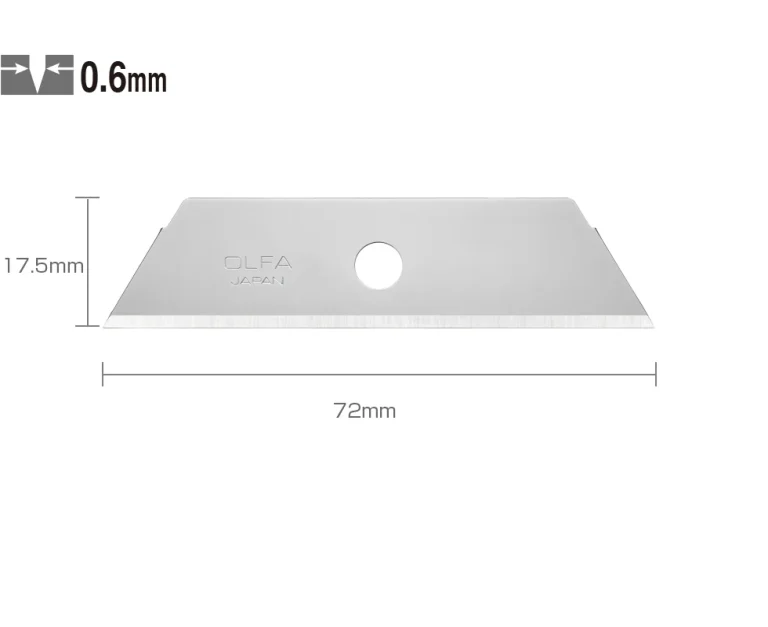
SKB-2/5B
OLFA SKB-2/5B is a five-blade replacement pack in a blistered plastic case and is intended for the safety-cutter and utility-cutter bodies linked in the Compatibility section.
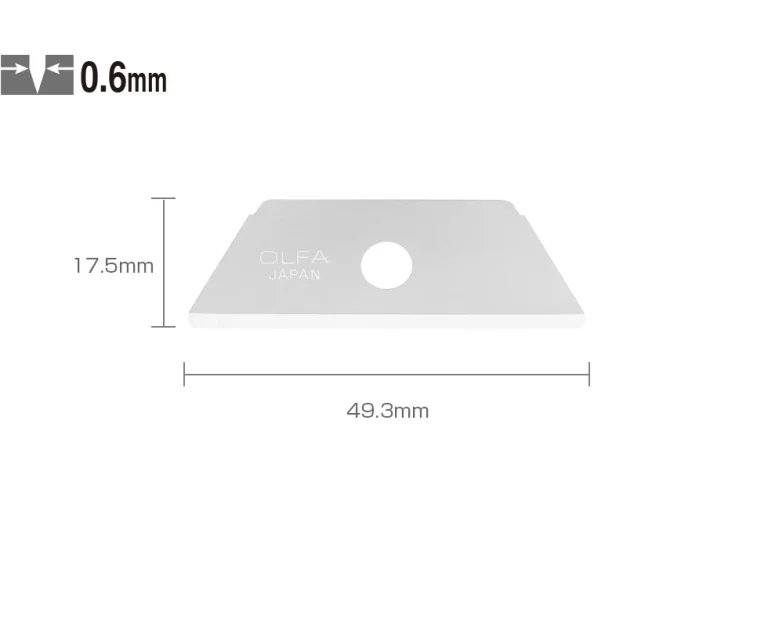
RSKB-2/5
OLFA RSKB-2/5 is a replacement blade.
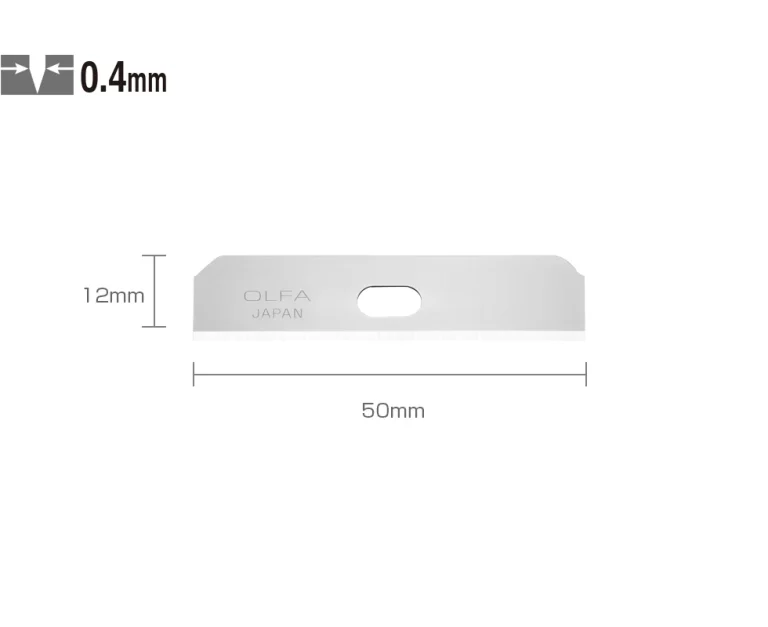
SKB-7/10B
OLFA SKB-7/10B is a replacement blade.
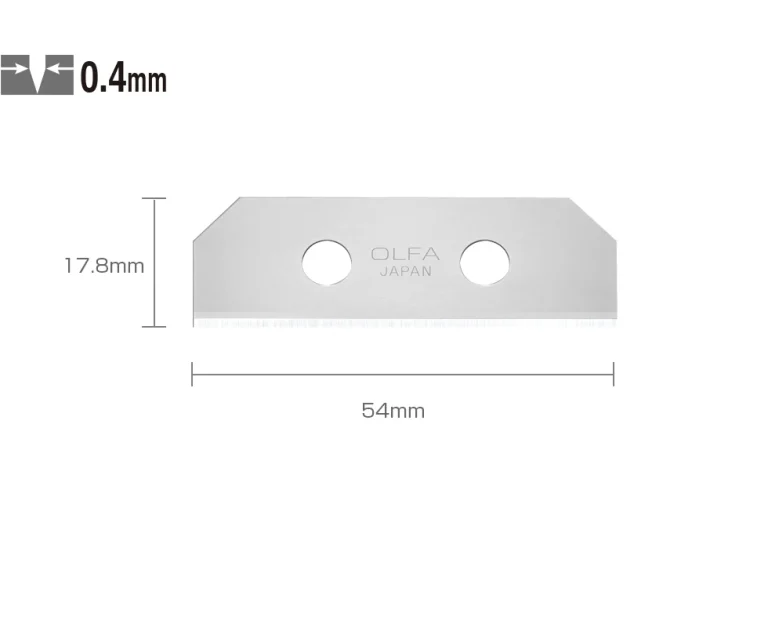
SKB-8/10B
OLFA SKB-8/10B is a replacement blade.
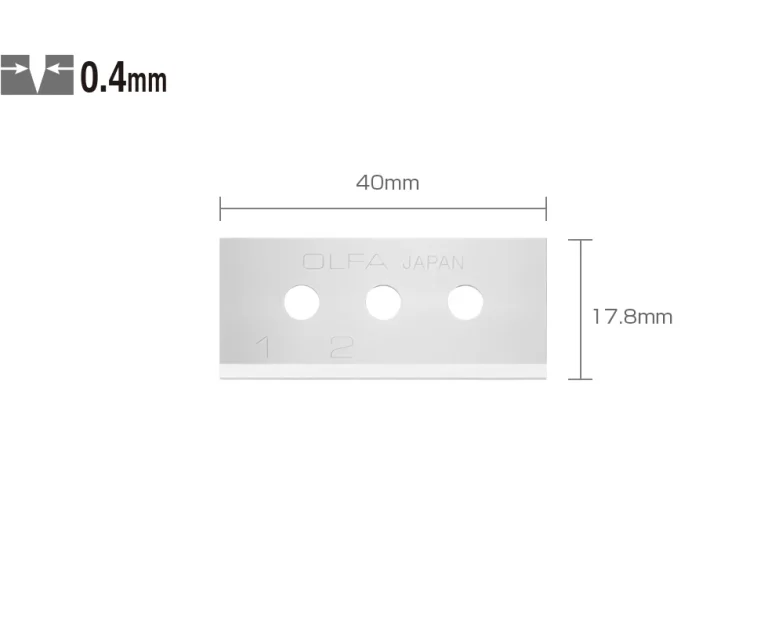
SKB-10/10B
OLFA SKB-10/10B is a 10-blade replacement pack designed for the SK-10 film cutter, supplied in a plastic case and blister pack.
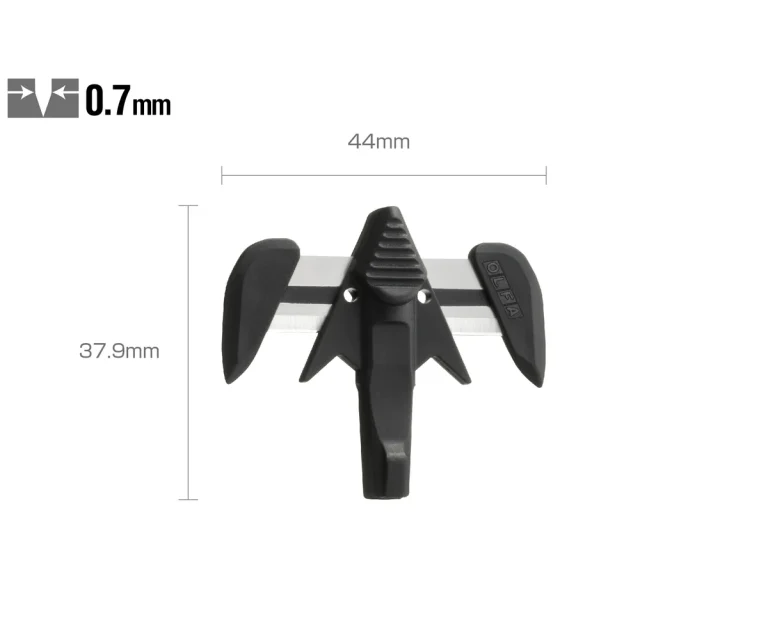
SKB-16/10
OLFA SKB-16/10 is a paper box of ten stainless-steel replacement blades for SK-16. Each blade has two cutting points.
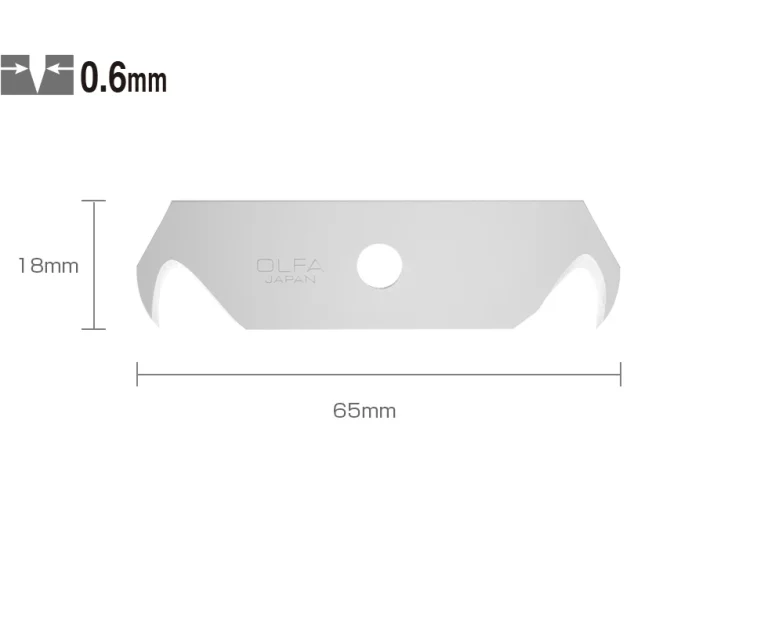
HOB-2/5
OLFA HOB-2/5 is a replacement blade; the hook-shaped blade guides the cutting edge into the material as described in the product instructions.
Map the cutting point
Record task, material, direction, frequency and current tool.
Identify the risk
Review blade exposure, hand position, tool storage and collection.
Narrow the mechanism
Compare self-retracting, guarded, fully automatic or concealed-blade directions.
Select candidate models
Use the matrix and exact Product evidence.
Test at the workstation
Observe material fit, handling and control behavior.
Standardize the process
Define issue, use, replacement, collection and training responsibilities.
Describe the actual cutting task and environment.
Clarify the process around the tool.
Describe the component, operating conditions or technical issue so AE-TECH can prepare the right discussion.
The online form is not available yet. Please contact AE-TECH directly.
Contact AE-TECH